Classical vs. Black Hat vs. Form School Feng Shui: What's the Difference?
Key Takeaways
The three main feng shui schools differ in method: Form School (oldest, 3,000+ years) reads the physical landscape — landforms, roads, building shapes. Compass (Classical) School adds luopan compass calculations including the Kua Number and time-based Flying Stars, personalizing readings by compass direction and construction year. Black Hat (BTB, 1980s) simplifies by aligning the Bagua to the front door with no compass or birth data. Form School is the foundation; Classical adds precision; BTB offers accessibility for beginners.
Autumn Moon
Practitioner & Guide
If you've read more than one feng shui book or article, you've probably noticed that different sources sometimes give contradictory advice. One says your wealth corner is in the southeast. Another says it's the far-left corner from your front door. Both can't be right — and yet, both are, depending on which school of feng shui you're following.
Understanding the main schools of feng shui helps you make sense of conflicting advice and choose an approach that actually works for your space. Here are the three you'll encounter most often.
Quick Comparison: The Three Schools at a Glance
| Feature | Form School | Compass (Classical) | Black Hat (BTB) |
|---|---|---|---|
| Age | 3,000+ years (oldest) | ~1,000 years | 1980s (newest) |
| Uses compass? | No | Yes (luopan) | No |
| Bagua orientation | By landform | By compass direction | By front door |
| Time-based? | No | Yes (Flying Stars) | No |
| Personalization | Low | High (birth year + home) | Low (same grid for all) |
| Best for | Reading landscape & layout | Precision & personalization | Beginners & quick wins |
Form School (形势派) — The Original
Form School is the oldest tradition, dating back over 3,000 years. It reads the physical landscape — mountains, hills, rivers, roads, and the shapes of buildings. The classic Form School ideal is the "armchair" position: a home with a mountain behind it (support), lower land in front (the "bright hall" where energy gathers), and hills or structures on either side (protection, like the arms of a chair).
In modern practice, Form School translates to: What do you see when you stand at your front door? Is there a clear, open view (good)? A sharp angle pointing at you (sha chi, bad)? A road rushing straight at your door (energy too fast, bad)? A tree blocking your entry (energy blocked, bad)?
Form School is the foundation of all feng shui. Even when using compass calculations, a skilled practitioner always reads the form first. You can have perfect compass directions, but if a sharp roof angle is pointing at your front door, the form overrides the calculation.
Compass School (理气派) — The Calculations
Compass School adds a layer of precision using the luopan (Chinese compass). It includes several systems:
Eight Mansions (Ba Zhai): Calculates your Kua Number from your birth year and gender, which determines your four favorable and four unfavorable directions. You then orient your bed, desk, and stove toward your favorable directions.
Flying Stars (Xuan Kong): The most advanced system. It uses the year your home was built and its facing direction to calculate a "flying star chart" — a 3×3 grid of numbers showing where positive and negative energy resides in your home during specific time periods. Flying Stars changes over time, which is why a home that felt great for years can suddenly shift.
Compass School is what makes feng shui personal and precise. Two identical houses facing different directions will have different energy. The same house will shift as time cycles change. This is why a one-size-fits-all feng shui tip can never be as effective as a personalized reading.
Black Hat Sect (BTB) — The Simplified Version
Black Hat Sect Tibetan Buddhist (BTB) feng shui was developed by Grandmaster Thomas Lin Yun in the 1980s. It simplified feng shui for Western audiences in three key ways:
1. Fixed Bagua: Instead of orienting the Bagua by compass direction, BTB aligns it to the front door. The wall with your front door is always the bottom row (Knowledge, Career, Helpful People); the far wall is the top row (Wealth, Fame, Relationships). This makes it easy to apply without a compass.
2. No compass required: BTB doesn't use directional calculations, Kua Numbers, or Flying Stars. This makes it accessible but also less personalized — your wealth corner is in the same place regardless of where you live or when you were born.
3. Emphasis on intention: BTB places heavy weight on the practitioner's intention and spiritual practice. The "three secrets" (body, speech, mind) are used when making adjustments.
BTB is responsible for most of the feng shui advice you'll find online. It's approachable, and its recommendations won't harm your space. But because it ignores compass direction and time cycles, it can't deliver the precision of Classical feng shui.
Classical Feng Shui — The Integrated Approach
Classical feng shui combines Form School and Compass School. A classical practitioner:
1. Reads the physical form (landscape, roads, neighboring buildings, interior layout).
2. Takes a compass reading to determine the home's facing direction.
3. Calculates the Flying Stars chart based on the year the home was built and its facing direction.
4. May calculate the client's Kua Number for personal direction recommendations.
5. Often incorporates the client's BaZi chart to understand which elements they personally need.
This is the approach I practice because it's the most accurate and the most personal. It accounts for the unique energetics of your specific home — not a generic template applied to every space.
Which School Is Right for You?
If you want to make simple, immediate improvements and don't want to learn compass calculations, BTB's fixed Bagua is a fine starting point. You won't go wrong clearing clutter, fixing your front door, and placing furniture in the commanding position.
If you want precision — if you're making a major decision like buying a home, renovating, or understanding why a space that used to feel good has shifted — Classical feng shui is the answer. The compass and time-cycle calculations reveal things that a fixed Bagua simply cannot.
If you're choosing a consultant, ask which school they practice. A BTB practitioner will give you general guidance. A Classical practitioner will give you a personalized reading based on your home's actual orientation and your birth chart. Both have value — but they're not the same thing.
For a Classical feng shui consultation, book a session. I work with clients in Utah in person and worldwide via video.
Frequently Asked Questions
What is the difference between Classical and Black Hat feng shui?+
Classical feng shui uses a compass to orient the Bagua by actual direction and incorporates time-cycle calculations (Flying Stars) and personal birth chart data. Black Hat (BTB) feng shui aligns the Bagua to the front door, requires no compass, and applies the same layout to every space. Classical is more precise and personalized; BTB is simpler and more accessible.
Which type of feng shui is most accurate?+
Classical feng shui, which combines Form School (reading the physical landscape) and Compass School (directional calculations and time cycles), is considered the most accurate because it accounts for the unique orientation, construction year, and occupant of each space rather than applying a fixed template.
Do I need a compass for feng shui?+
You need a compass only if you are practicing Classical (Compass School) feng shui, which orients the Bagua by actual direction and calculates Flying Stars. Black Hat feng shui does not require a compass because it aligns the Bagua to the front door instead of to compass directions.
What is Form School feng shui?+
Form School is the oldest tradition of feng shui. It reads the physical landscape — mountains, rivers, roads, building shapes — to assess how energy flows toward and around a space. It is the foundation of all feng shui and is always considered, even when compass calculations are also used.
Continue Reading
What Is Feng Shui? A Complete Beginner's Guide
Feng Shui is the ancient Chinese art of arranging your environment to harmonize energy flow. Learn what feng shui is, how it works, and how to start using it.
Read MoreThe Bagua Map Explained: 9 Areas of Your Home
The feng shui Bagua map divides your home into 9 life areas: Wealth, Fame, Relationships, Family, Health, Creativity, Knowledge, Career, and Helpful People. Learn how to use it.
Read MoreThe Five Elements in Feng Shui: Wood, Fire, Earth, Metal, Water
The Five Elements — Wood, Fire, Earth, Metal, and Water — are the building blocks of feng shui. Learn what each element represents and how to balance them in your home.
Read MoreAbout the Author
Autumn Jensen
Classical Feng Shui Consultant · Chinese Astrology (BaZi) Practitioner · Holy Fire III Reiki Master
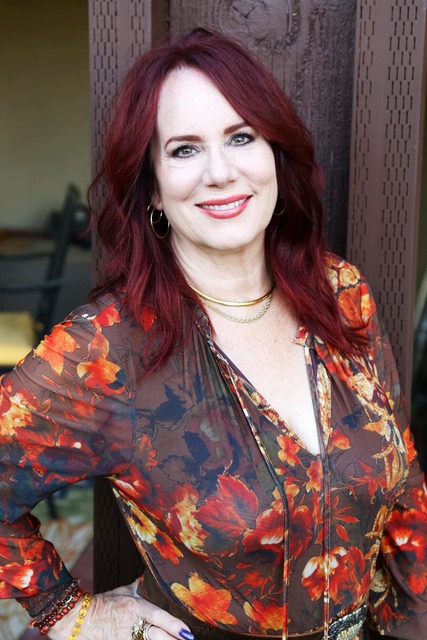
Autumn Jensen is the founder of Autumn Moon LLC, based in Lehi, Utah. With over 15 years of clinical practice, she integrates Classical (Form and Compass) Feng Shui, BaZi Chinese Astrology, Holy Fire III Reiki, and permanent cosmetics artistry into a holistic approach to space, energy, and self. She serves clients in person across the Wasatch Front and virtually worldwide.